Plenary Speakers
TOPIC 1 - Structure, reactivity & synthesis
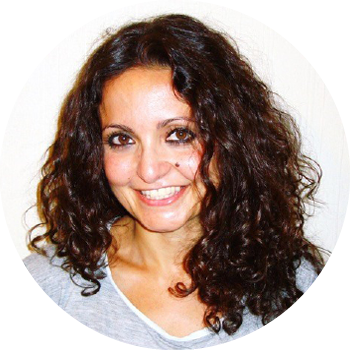
Vera Muccilli graduated in Industrial Chemistry in 2002 from the University of Catania, where she went on to earn a PhD in Chemical Sciences in 2006. That same year, the Mass Spectrometry Division of the Italian Chemical Society recognized her as a promising young researcher in the field. In June 2015 she received a Postgraduate Specialization Degree in Clinical Biochemistry from the University of Catania's Faculty of Medicine, and since October 2021 she has served as Associate Professor of Organic Chemistry.
Her research interests range from the chemical and enzymatic modification of polyphenols to the extraction, purification, and spectroscopic characterization of compounds derived from agricultural waste. She also investigates the antioxidant activity and metabolic-enzyme inhibition of both natural and synthetic compounds.
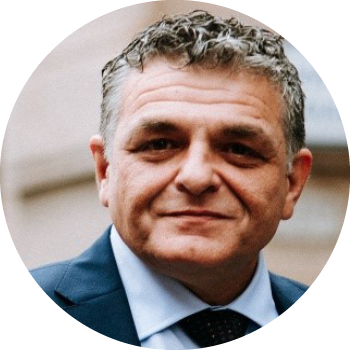
Luca Valgimigli is Professor of Organic Chemistry at the Department of Chemistry “G. Ciamician”, University of Bologna (Italy). He holds a M.Sci. in Medicinal Chemistry and a PhD in Organic Chemistry. He is the Director of the international M.Sci. program in Advanced Cosmetic Sciences (ACS) and leader of Free Radicals and Antioxidants research group.
His research activity is in the area of free radicals’ reactions, their kinetics and mechanisms, with particular focus on the rational design of inhibitors of radical-chain reactions and antioxidant systems, including their application in health and health related products, such as food and cosmetics. Recent work has addressed the chemistry of natural lipids’ peroxidation, the study of natural foodborne antioxidants to develop sustainable preservative systems for application in food and cosmetic science, and the development of biomimetic models for testing them. He is also active in the research of inhibitors of tyrosinase and enzyme-mediated oxidative food spoilage. More recently he has focused on the study of non-conventional radical-trapping inhibitors of ferroptosis.
TOPIC 2 - Bioactivity, bioavailability & microbiota

Professor Ana Rodriguez-Mateos is Professor of Human Nutrition at King’s College London. Her research focuses on dietary strategies to prevent cardiometabolic disease, with particular expertise in the bioavailability, metabolism and health effects of dietary (poly)phenols, their interaction with the gut microbiome, and the development of biomarkers of dietary intake. Her work combines human intervention studies with advanced analytical approaches to nutrition science.
Professor Rodriguez-Mateos is Editor-in-Chief of Food & Function, founder and co-chair of the Nutrition Society Special Interest Group on Phytochemicals and Health, and serves on the Royal Society of Chemistry Food Group Committee. She is a Registered Nutritionist (RNutr), Fellow of the Royal Society of Chemistry (FRSC), Fellow of the Higher Education Academy (FHEA), and recipient of the Nutrition Society Silver Medal Award (2023).

Javier Ottaviani is Director of the Food & Nutrition Core Laboratory at Mars, Incorporated, and affiliated faculty in the Department of Nutrition at the University of California, Davis.
Dr. Ottaviani’s research focuses on the development and translation of innovations in diet and nutrition to support health maintenance and optimization at both the individual and population levels. His work is conducted through extensive international academic and clinical collaborations and integrates analytical chemistry, biochemistry, epidemiology, and controlled human dietary intervention studies.
Dr. Ottaviani has contributed to advancing the understanding of the absorption, distribution, metabolism and excretion of flavanols in humans, as well as to the development and validation of biomarkers of flavanol intake. These biomarkers have been applied in large-scale clinical studies, including the COcoa Supplement and Multivitamin Outcomes Study (COSMOS), one of the largest randomized trials investigating polyphenol-related health outcomes. He has also contributed to the development of standardized and accredited analytical methods for the quantification of flavanols and procyanidins in cocoa-based matrices.
Collectively, his work aims to strengthen the mechanistic and clinical evidence linking dietary polyphenols to human health and to support the development of evidence-based nutritional strategies for disease risk reduction and health promotion.
TOPIC 3 - Metabolomics, targeted analysis & big data
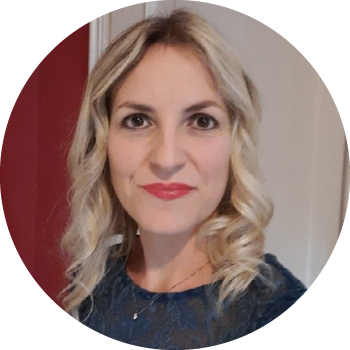
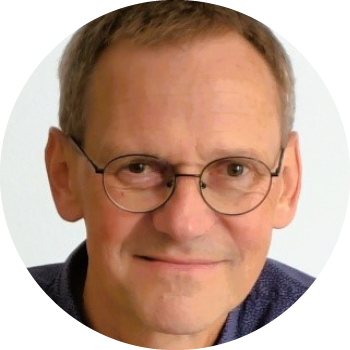
Rainer Schuhmacher is Professor at BOKU University and group leader at the Institute of Bioanalytics and Agro-Metabolomics Department of Agricultural Sciences. He received his degrees in Chemistry from the University of Konstanz in Germany and the TU Wien in Austria. In 2009 he earned his habilitation in Analytical Chemistry from the BOKU University.
The work of his research group Plant-Microbe Metabolomics is focused on the development and application of novel, isotope-assisted workflows for metabolomics research. Special emphasis is given to the investigation of the molecular mechanisms underlying plant-pathogen- as well as plant- beneficial microbe interactions. Another major topic of interest is metabolomics of abiotic stress in plants. His research is complemented by purification and characterization of bioactive compounds as well as analytical quality assurance in metabolomics.
TOPIC 4 - Food processing, sensory properties & safety
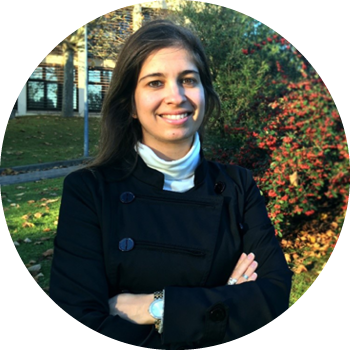
Susana Soares is an Assistant Professor at the Faculty of Sciences of the University of Porto and a researcher at REQUIMTE/LAQV. She is the Principal Investigator of the ERC Starting Grant BeTASTy, Coordinator of the Horizon Europe project WHEATBIOME, and Action Chair of the FLAVOURsome COST Action.
Her research explores the molecular basis of food taste, with a particular focus on how polyphenols contribute to sensory properties such as astringency and bitterness. She has made important contributions to understanding polyphenol–protein interactions, spanning food technology, nutrition, bioaccessibility, digestibility, and oral perception. Her work also focuses on developing strategies to reduce undesirable taste attributes in plant-based foods and improve the technological performance of alternative proteins.
She has received several distinctions, including the American Chemical Society Agricultural and Food Chemistry Division Best Paper Award, the ADVID Michael Symington Award, and the Nestlé R&I Manfred Rothe Excellence Award in Flavor Research. Her research is strongly collaborative, involving national and international research institutions as well as partnerships with the food industry.
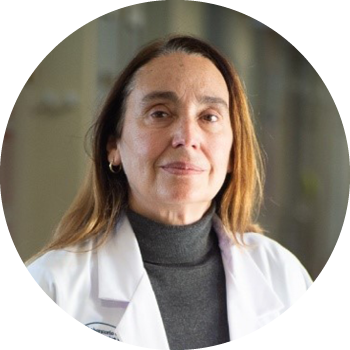
Professor Cristina Garcia-Viguera holds a Degree in Pharmacy, Ph.D. in Chemical Sciences, and, since 2009 she is a Research Professor at the Spanish National Research Council (CSIC).
She is the founder and promoter of the Phytochemistry and Healthy Foods Laboratory (LabFAS), focused on the development of safe, salubrious, and sustainable (3S) foods rich in bioactive phytochemicals (mainly (poly)phenols) through integrated field-to-health studies.
She has served as Head of Department, Deputy Director of CEBAS-CSIC, and member of the Advisory Committee to the CSIC Vice-Presidency (CATRI). She has also been Congress Secretary of the Phytochemical Society of Europe (PSE) and member of the Advisory Board of VIDARIUM (Grupo Nutresa, Colombia). Currently, she is a member of the Nutrition Committee of the International Fruit and Vegetable Juice Association (IFU), Co-founder of the spin-off company Aquaporins & Ingredients, Head of the Associated Unit “Food Quality and Risk Assessment” (CSIC/UPCT), and Full Member of the Academy of Sciences of Murcia.
She has authored more than 200 scientific publications (h-index: 75, Scopus), holds 5 patents and 4 know-how developments, has delivered numerous lectures and courses worldwide, organized international conferences, supervised over 15 international Ph.D., and coordinated more than 25 research projects.
TOPIC 5 - Biodiversity, biogenesis in plants & ecosystems
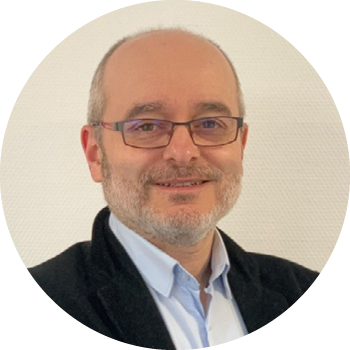
Professor Frédéric Bourgaud is a French plant biotechnologist whose research focuses on the discovery, biosynthesis and biotechnological production of plant natural products for pharmaceutical, cosmetic and agricultural applications. After receiving his PhD in Agronomy from the National Polytechnic Institute of Lorraine, he developed an academic career at the University of Lorraine, where he became Professor of Plant Biotechnology and headed a joint University-INRA research laboratory dedicated to plant specialized metabolism. In parallel, he founded several biotechnology companies, including Plant Advanced Technologies (PAT), pioneering innovative approaches such as "plant milking" for the sustainable production of high-value natural compounds.
He is currently Professor at the University of Lorraine (UMR UL–CNRS 7274, Laboratoire Réactions et Génie des Procédés), Scientific Director of the Botanical Gardens of the Greater Nancy Metropolitan Area, and Corresponding Member of the French Academy of Agriculture. His current research combines plant bioprospection, metabolomics, synthetic biology and artificial intelligence to accelerate the discovery and sustainable production of bioactive natural products.
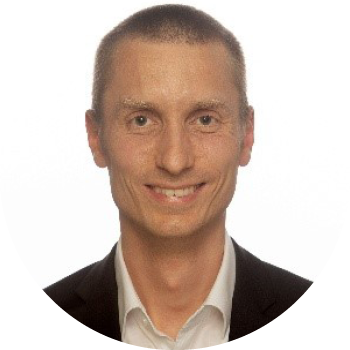
Prof. Boas Pucker studied Biology and Genome-Based Systems Biology at Bielefeld University. During his doctoral studies at the Center for Biotechnology (CeBiTec) at Bielefeld University, he worked on several plant genome sequencing projects and developed bioinformatics tools. From 2016 to 2019, he was supervising the ‘Bielefeld-CeBiTec’ iGEM teams. After earning his doctorate, he joined the Department of Plant Sciences at the University of Cambridge (UK) as a postdoctoral researcher. There, he investigated the complex evolution of pigment biosynthesis pathways in the plant order Caryophyllales. From 2021 to 2025, he led the Plant Biotechnology and Bioinformatics group as a professor at TU Braunschweig. He also headed the technology transfer center Plant Genomics and Applied Bioinformatics at iTUBS. Currently, He is a Professor of Plant Biotechnology and Bioinformatics at the University of Bonn. His research focuses on the discovery and evolutionary analysis of plant biosynthetic pathways, combining genome sequencing, molecular biology, biochemistry, big data analysis, and tool development to gain a deeper understanding of plant metabolic diversity.
TOPIC 6 - Biomaterials, green chemistry & circular bioeconomy